
AI Video Production vs Traditional Video Production: What Should Brands Choose in 2026?
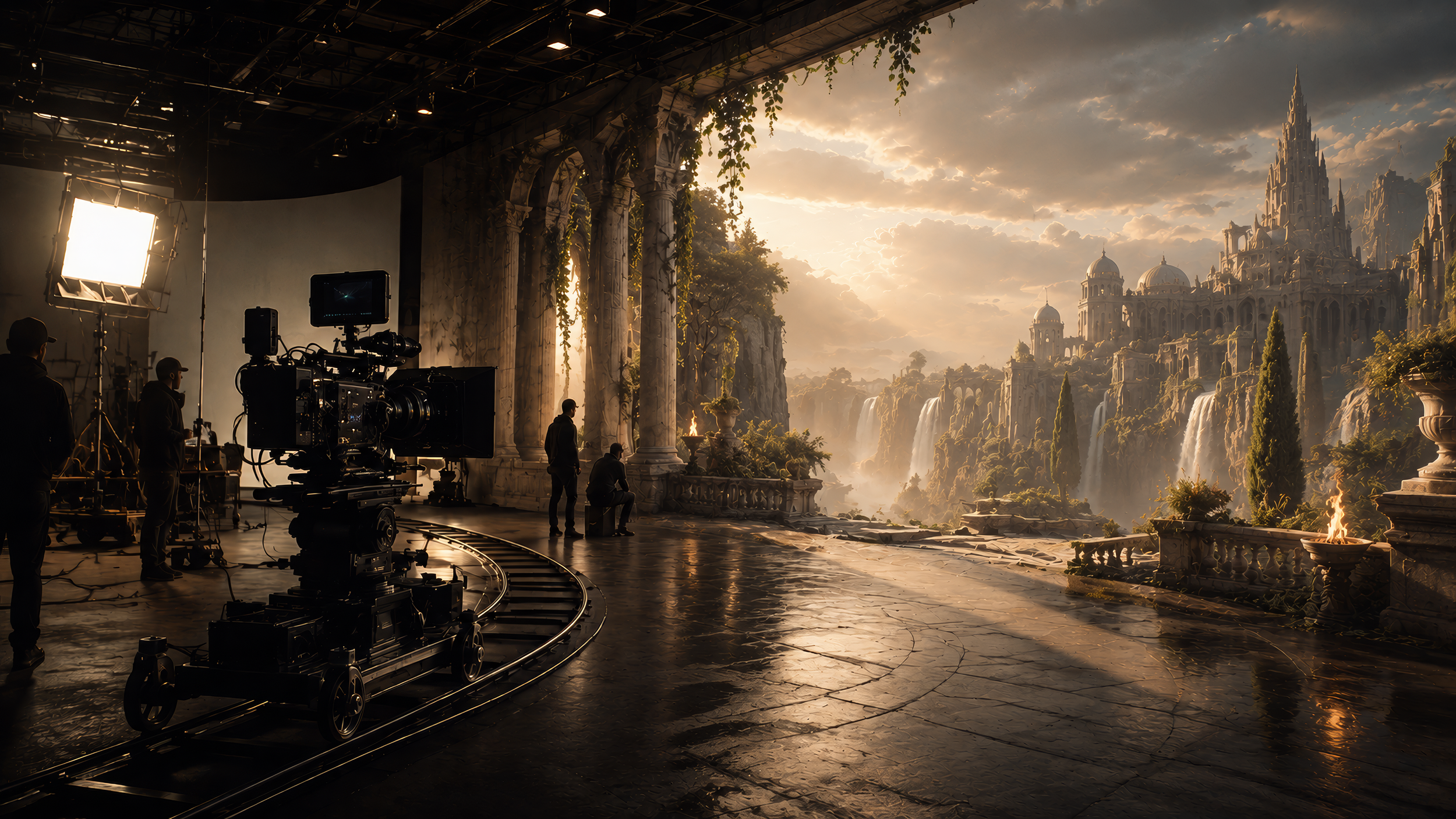
Video production is no longer limited to cameras, physical sets and location shoots. In 2026, brands can also build campaigns using generative AI, creating characters, environments, products and cinematic sequences through an AI-native production process.
But that does not mean traditional video production has become obsolete.
AI video production vs traditional video production is less about deciding which method is universally better and more about choosing the production approach that best fits the creative idea. Both have different strengths. For brands, understanding those differences can make it easier to choose the right approach for a campaign.
Contents
01- What Is AI Video Production?
02- What Is Traditional Video Production?
03- AI Video Production vs Traditional Video Production: Key Differences
04- When Does AI Video Production Make More Sense?
05- When Does Traditional Video Production Make More Sense?
06- Can AI and Traditional Video Production Work Together?
07- Which Approach Should Your Brand Choose?
08- Frequently Asked Questions
What Is AI Video Production?
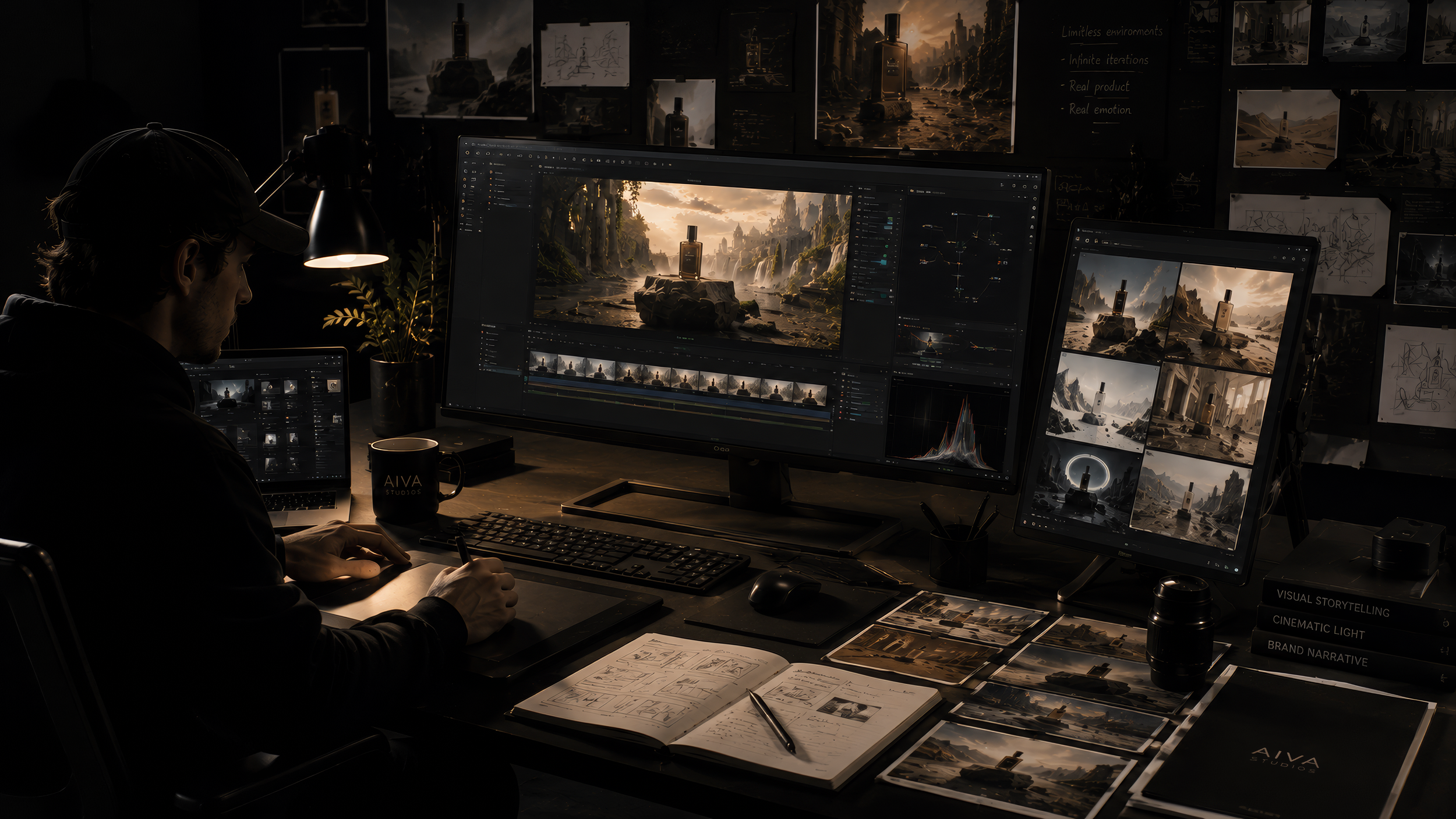
AI video production uses generative AI as part of the core production process rather than simply applying AI tools to traditionally filmed footage. An AI-native production can begin with a creative concept before moving through visual development, storyboarding, image generation, video generation, sound design and post-production. Instead of physically building every environment or capturing every shot with a camera, visual elements can be generated digitally from the ground up.
However, professional AI production is not simply a case of entering a prompt and accepting the first result. The process still requires planning, visual references, shot development, generation, selection, editing and quality control. This makes AI less of a replacement for creative direction and more of a different way of executing it.
What Is Traditional Video Production?
Traditional video production captures footage in the physical world. Depending on the project, this can involve directors, actors or models, camera crews, lighting teams, equipment, locations, constructed sets, props and physical products. The production generally moves through pre-production, filming and post-production.
For many projects, this remains the right approach. If a campaign depends on a particular performance, genuine location, physical interaction or exact demonstration of a real product, filming it can provide a level of certainty that generated imagery may not.
Traditional production also gives filmmakers direct control over what exists in front of the camera. The trade-off is that ambitious concepts can require significant physical production. A new location, set, weather condition or visual environment may introduce another logistical requirement.
AI Video Production vs Traditional Video Production: Key Differences
THE BIGGEST DIFFERENCE IS WHERE THE VISUAL WORLD OF THE CAMPAIGN IS CREATED.
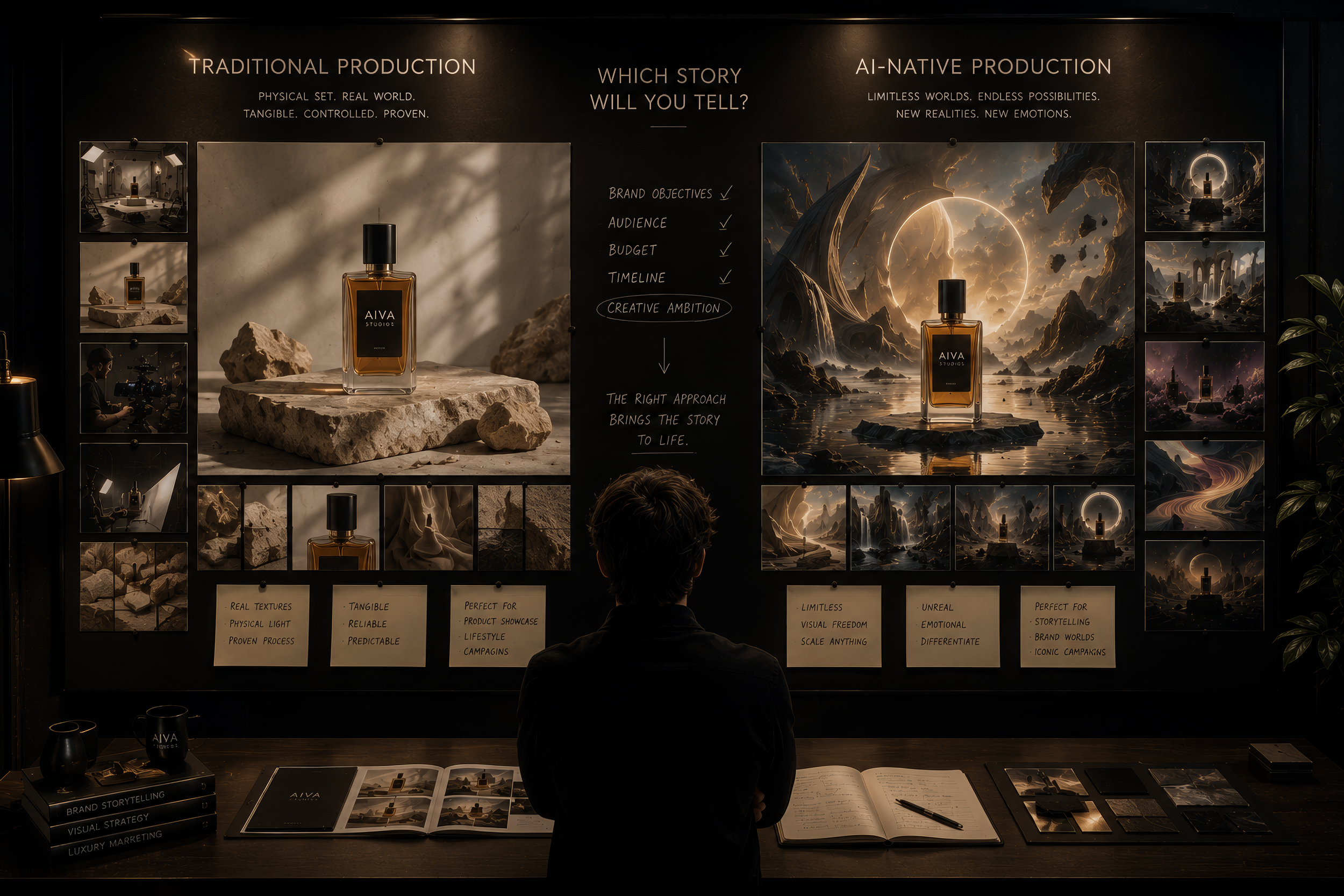
Traditional production largely creates or finds that world physically before capturing it through a camera. AI-native production can create much of that world digitally. That changes what is possible during production. A brand film might move from a snow-covered mountain to a futuristic city and then into an abstract product environment without physically travelling between those locations. Concepts that would traditionally require extensive set construction, travel, CGI or complex shoots can therefore be approached differently. AI production can also make experimentation easier. Different environments, compositions and visual directions can be explored before committing to a final sequence.
However, greater generative freedom comes with a different kind of production challenge: control.
AI video models have improved substantially, including better reference-based generation and controls for maintaining characters, objects and visual styles. But consistency and repeatability can still require careful workflows, particularly across multiple shots. Details can drift, complex interactions may need multiple generations, and precise branded elements sometimes need to be handled separately in post-production. Traditional production has the opposite advantage: once the right set, product, performer and lighting are in front of the camera, those elements physically exist and can be captured repeatedly.
The two approaches therefore involve different constraints rather than one simply removing constraints altogether.
When Does AI Video Production Make More Sense?
AI-native production becomes particularly interesting when the creative idea would be difficult to realise physically. That might include surreal advertising concepts, imaginary environments, cinematic product worlds, rapid transitions between locations or visuals that deliberately challenge what could exist in reality. It can also work well when a campaign requires several digital deliverables or different visual formats. Rather than asking, “How would we physically shoot this?”, the creative team can begin by asking, “What should this campaign look and feel like?”
That change can give brands considerably more freedom during concept development.
AI production can also reduce dependence on some traditional production requirements, such as physical sets or location travel. But brands should not assume that means every AI project will automatically be faster or cheaper. Complexity, quality expectations, revisions and the level of control required still affect the production process.
When Does Traditional Video Production Make More Sense?
Traditional production remains particularly valuable when authentic real-world capture is central to the idea. For example, a campaign built around a specific actor's performance may benefit from filming that performance directly. The same applies when showing the exact operation of a physical product, documenting a real event or location, capturing interviews or producing content where factual visual accuracy is essential. AI generation can create highly convincing imagery, but convincing imagery and documented reality are not the same thing.
That distinction matters for brands.
Current generative systems can also still encounter issues with continuity, exact actions, readable details and repeatability. For precision-critical material, conventional capture or other controlled production methods can therefore remain the safer choice.
Can AI and Traditional Video Production Work Together?
Yes! And the choice does not always have to be one or the other.
A production can combine filmed footage with AI-generated environments, sequences or visual effects. AI can also be used during concept development and pre-production before a traditional shoot takes place. For example, a brand might film its physical product and talent traditionally while using generative production to create environments that would be impractical to build or access.
The important part is deciding why AI is being used.
Using AI simply because it is available rarely makes a campaign stronger. Using it because it unlocks the creative idea can.
Which Approach Should Your Brand Choose?
START WITH THE CONCEPT, NOT THE TECHNOLOGY.
01- Choose AI-native video production when the campaign benefits from imaginative environments, visual experimentation, fewer physical production constraints or concepts that would be difficult to capture traditionally.
02- Choose traditional production when real performances, locations, events, physical interactions or precise real-world representation are fundamental to the campaign.
03- Consider a hybrid approach when the idea benefits from both.
Ultimately, AI video production and traditional video production are different ways of turning creative direction into finished imagery. For brands, the opportunity in 2026 is having more than one production route available and choosing the one that serves the idea best. At AIVA Studios, we specialise in AI-native video production for brands and agencies, combining creative direction with generative production and professional post-production to build cinematic advertising, brand films and product content.
Frequently Asked Questions
Is AI video production better than traditional video production?
Not universally. AI production can offer greater freedom for generating environments and concepts without creating everything physically, while traditional production provides direct control over real-world performances, products and locations. The better option depends on the campaign.
Can AI video production replace a traditional video shoot?
For some projects, yes. A campaign can be created primarily through AI-native production without a conventional shoot. Other projects benefit from traditional filming or a hybrid approach, particularly when authentic real-world capture is important.
Is AI video production just AI-generated clips?
No. Professional AI video production involves much more than generating individual clips. It can include concept development, art direction, storyboarding, reference creation, generation, editing, sound design, colour work and quality control.
Can AI video production be used for advertising?
Yes. AI video production can be used for commercials, brand films, product campaigns and social content. The production still requires strong creative direction, brand control and quality oversight to ensure the final work fits the campaign and the brand.
Explore AI Video Production with AIVA Studios
Considering AI-native production for an upcoming campaign? AIVA Studios works with brands and agencies to create cinematic commercials, brand films and product content using AI-native production workflows.