
AI Video Production: A Practical Guide for Brands in 2026
A polished commercial no longer has to begin with a full location shoot, a large crew and weeks of post-production. Equally, a prompt and a video generator are not a substitute for a strong idea. Professional AI video production sits between those two assumptions: it combines generative technology with creative direction, production judgement and rigorous quality control.
For marketing and creative teams, that distinction matters. AI can help a brand visualise an impossible environment, create dozens of localised product variations or make better use of existing footage. It can also produce work that feels generic, inconsistent or visibly synthetic when it is used without a clear creative framework.
This guide explains where AI video production fits, how it compares with traditional production, what it can deliver for advertising and ecommerce, and what a brand should look for in an experienced production partner.
IN THIS GUIDE
01 — What is AI video production?
02 — How does AI video production work?
03 — AI vs traditional production
04 — Benefits for brands
05 — Advertising & brand campaigns
06 — Ecommerce
07 — Cost
08 — Choosing an AI video production agency
09 — The future of AI video
10 — FAQs
What Is AI Video Production?
AI video production uses artificial intelligence to accelerate or support parts of the video-making process. Depending on the brief, this may include script development, concept visualisation, image generation, image-to-video animation, editing, sound design, voiceover, translation, captioning and visual effects.
It is broader than entering a sentence into a consumer video generator. A professional project may combine generated assets with live-action footage, photography, motion graphics, animation, licensed music and conventional editorial. The technology is selected because it serves the creative idea or production requirement, not simply because it is available.
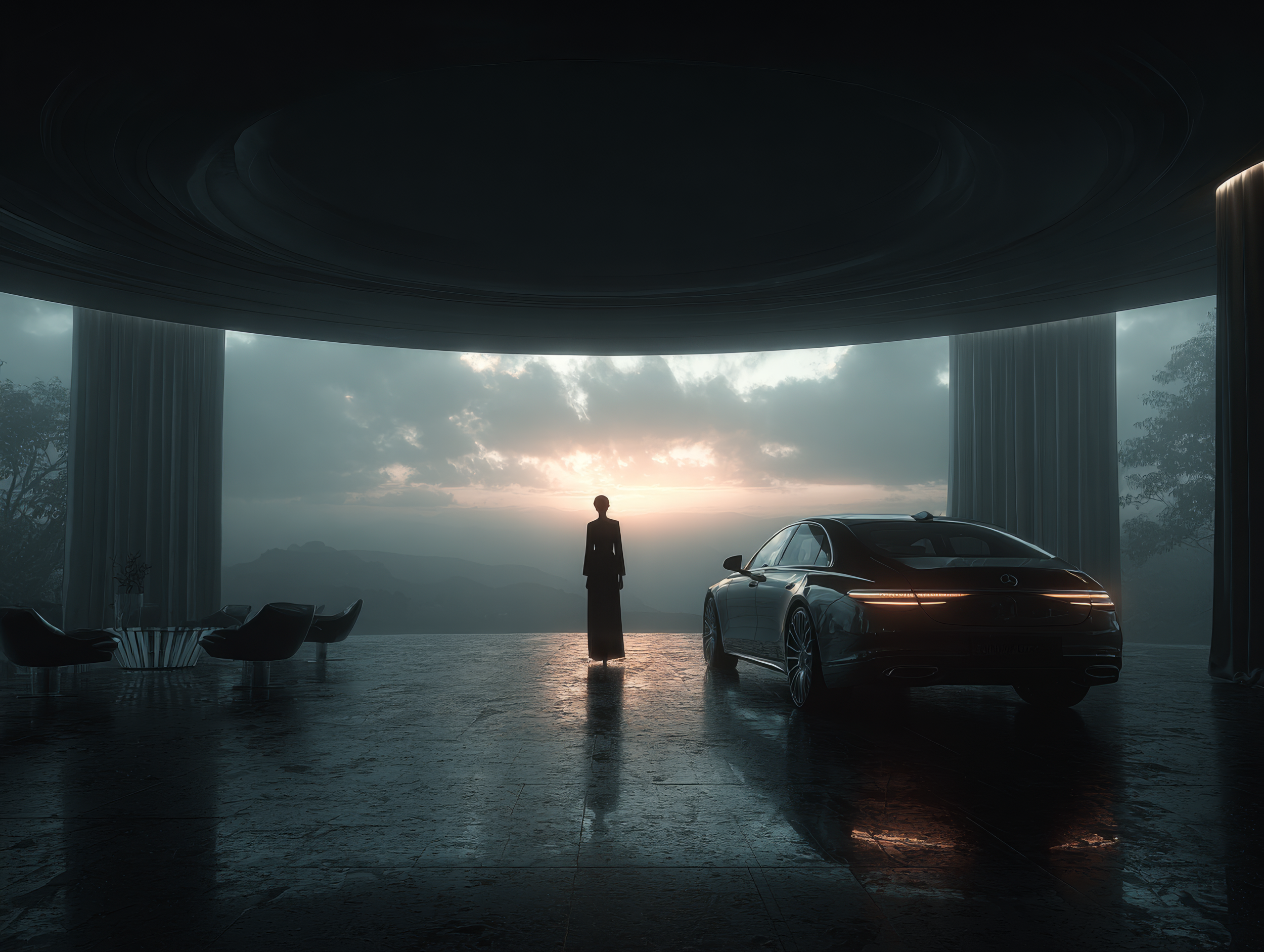
For example, a brand film might use AI-generated environments to show a product travelling through a world that cannot be filmed practically. An ecommerce team might use AI-assisted compositing to create consistent product scenes across hundreds of catalogue items. An existing campaign could be re-edited, reframed, dubbed and localised for new markets.
The central responsibility remains human. Directors, producers, designers and editors define the visual language, protect brand character, assess factual accuracy and decide what is good enough to publish. An AI video agency should hence behave like a production partner, not a button-pushing service.
How Does AI Video Production Work?
A typical workflow begins with the same questions as any good production: who is the audience, what should they feel or do, and what is the simplest compelling way to communicate it? Once the concept and script are agreed, AI can support several stages.
01 — Concept and pre-production
Generative images can help a creative team explore art direction, locations, lighting and camera language before committing to a shoot. Storyboards and animatics can make an abstract campaign easier for stakeholders to understand. This is particularly useful when the final idea involves unusual scale, fantasy, futurist design or difficult physical effects.
02 — Generation and production
Text-to-video, image-to-video and video-to-video models can create or transform moving imagery. A carefully designed reference frame may establish a product's appearance, composition and palette, while controlled animation adds movement. AI can also assist with synthetic presenters, provided the brand has appropriate consent and usage rights.
03 — Post-production
AI-assisted editing can identify shots, create rough cuts, remove unwanted noise, generate captions, match colour and extend or reframe footage. Voice synthesis and dubbing can create multilingual versions, although pronunciation, performance and cultural nuance still require review. Skilled editors then refine timing, sound, continuity and finish. The result should feel directed and authored, not assembled by default settings.
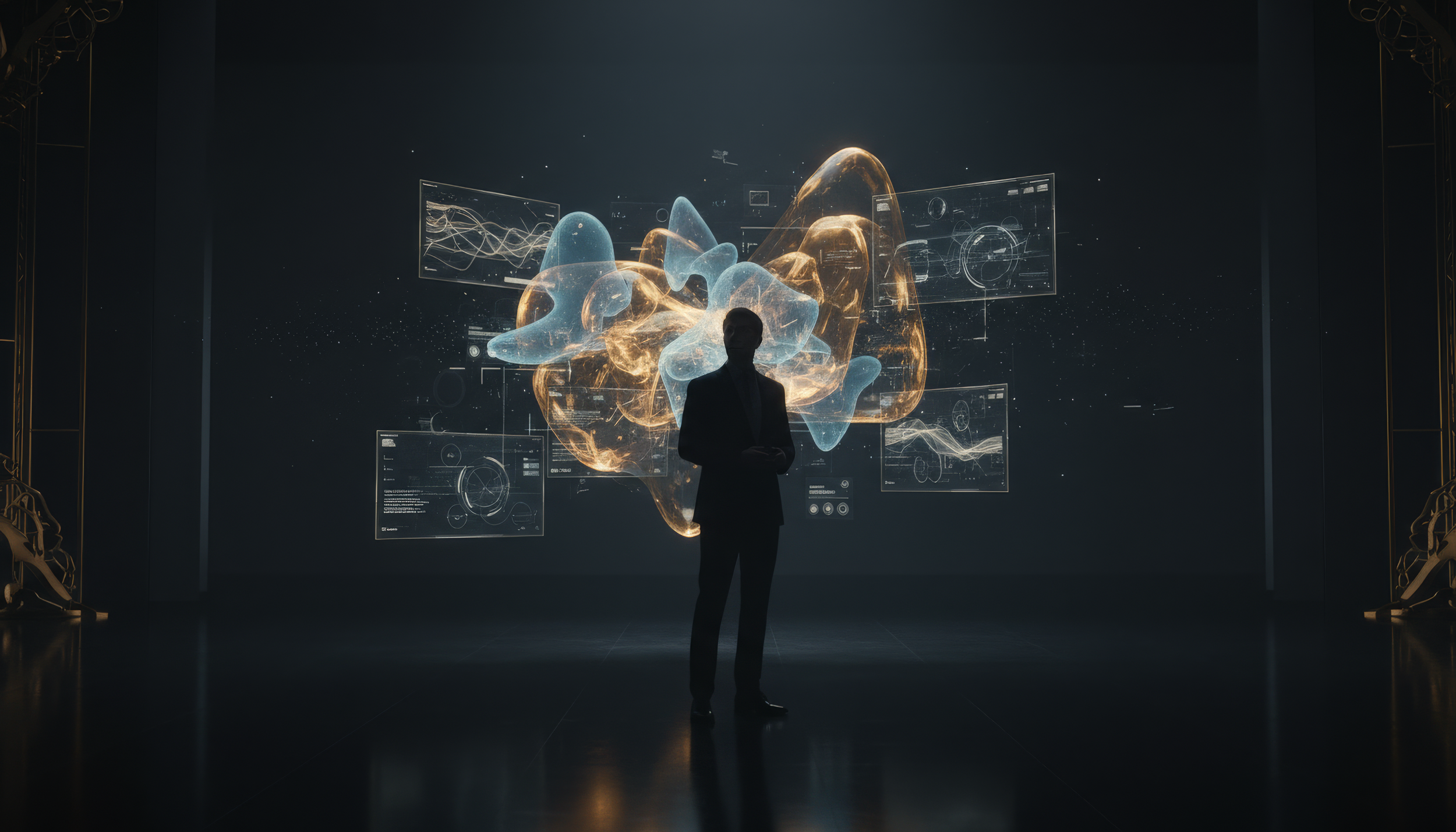
AI Video Production vs Traditional Video Production
Traditional production remains the right choice for many briefs. A live shoot offers physical performances, tangible products, natural interaction and direct control over camera, lighting and set design. It is often essential when a luxury brand needs to show a real material accurately, or when an actor's nuanced performance carries the film.
AI-led production can reduce the need for locations, crew, physical sets and repeated reshoots. It is particularly effective when a project needs many versions, rapid iteration or imagery that cannot be captured safely or affordably in the real world. A single creative direction may be adapted by market, aspect ratio, offer or audience without recreating an entire shoot.
The question is less about choosing between AI and traditional production and more about selecting the approach that best serves the brief. Hybrid production is often the strongest answer. A product can be filmed traditionally for accuracy, then placed into AI-generated environments. Live-action performances can be combined with generated extensions, animation or advanced compositing. An experienced AI production company should be comfortable recommending restraint when traditional craft will produce the more credible result.
“The most useful comparison is not ‘AI versus traditional’ but ‘which method best serves this brief?”
What Are the Benefits of AI Video Production for Brands?
01 — Creative Flexibility
The first benefit is creative flexibility. A team can explore several visual routes quickly, test an ambitious treatment and refine the strongest one before production costs escalate. AI can make a creative idea possible when a location, creature, transition or physical transformation would otherwise be impractical.
02 — Production Efficiency
Production efficiency is another advantage. Automated editing, asset generation and localisation can shorten turnaround times, especially for campaign rollouts with many deliverables. That does not mean every film becomes instant: approvals, art direction, rights checks and finishing still take time. It means effort can be directed towards decisions that improve the work.
03 — Scalability
Scalability is valuable for brands with large product ranges or international audiences. One core film may become different lengths, formats, languages and regional versions while retaining a coherent identity. Teams can also test creative variants, such as opening shots, messages or calls to action, without producing each version from scratch.
04 — Smarter use of budget
AI can help stretch a production budget towards stronger creative, media distribution or post-production. But, quality is not automatic. Poorly controlled generation may introduce inaccurate packaging, changing logos, implausible hands or inconsistent characters. Human review protects brand trust.
How Brands Are Using AI Video Production
Brands use AI video production across the marketing mix, not only for highly stylised advertising. It can support product explainers, demonstrations, tutorials and launch content where clarity matters more than spectacle. Existing long-form footage can be searched, edited into shorter pieces and reformatted for different channels.
For internal communications, training and onboarding, synthetic voice, translation and captioning can make a central video more accessible across regions. A business may create local versions while retaining the same approved messaging and visual system.
Campaign teams also use AI to produce regional or audience-specific variants. A retailer could adapt an offer, product selection or voiceover by market, subject to appropriate feed integration and approval. Creative agencies may use a white-label AI production partner to increase capacity while keeping strategy, client relationships and final creative control in-house.
The suitability depends on the brand and the message. AI is less helpful when the audience needs proof of a real physical experience, a highly specific human performance or unquestionable product representation. It is more useful when the job involves volume, iteration, visual invention or careful repurposing.
AI Video Production for Advertising and Brand Campaigns
Advertising benefits from AI when a campaign needs multiple creative routes or many deliverables. During development, generated frames and moving tests can help a creative director establish the tone of a cinematic brand film before a final treatment is approved. They can also reveal whether an idea communicates clearly in a few seconds.
For performance campaigns, AI can support A/B testing of openings, product demonstrations, copy, voiceovers and calls to action. It may also help create dynamic variants that reflect a market, product feed or promotion. These applications need disciplined governance: every claim, price, product detail and legal line must be checked before publication.
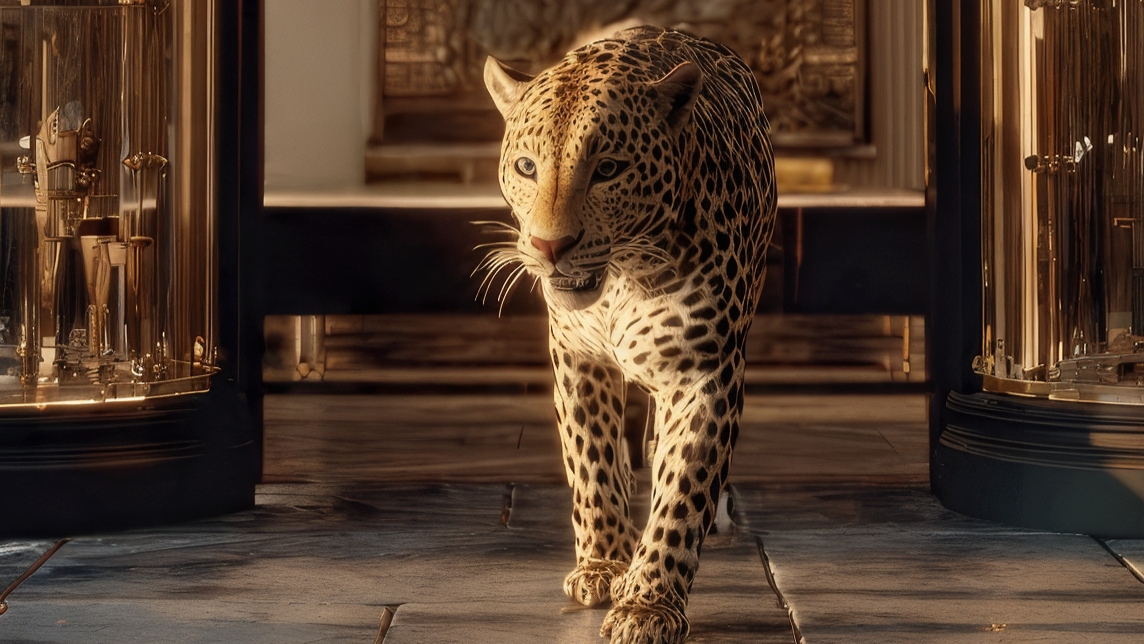
AI-led campaign development — AIVA Studios
Premium and luxury brands should be especially careful about texture, lighting, motion and material accuracy. A visibly artificial finish can undermine the very perception the campaign is intended to create. In the right hands, but, generated imagery can provide a distinctive cinematic language rather than a generic synthetic look. The deciding factor is direction, reference, composition, pacing and finishing, not the novelty of the model.
A capable AI video production company can also combine generated sequences with live action, practical photography, motion design and sound. That hybrid approach often delivers greater credibility than a fully generated film.
AI Video Production for Ecommerce
Ecommerce businesses often have a clear commercial need: more useful product video, across more products and markets. AI can help turn still photography, pack shots and existing footage into product-page videos, short demonstrations and channel-specific advertising assets.
A catalogue-wide system may create consistent scenes, camera movements or explanatory overlays while preserving approved brand rules. Product videos can show use cases, assembly, key features or a sequence of benefits. Short versions can then be adapted for paid media, marketplaces and shopping environments.
ONE ASSET. MULTIPLE MARKETS.
AI is also useful for localisation. Voiceover, subtitles and selected visual elements can be adapted for different markets, with human checks for pronunciation, terminology, regulations and cultural context. For a retailer, this can be more practical than commissioning separate shoots for every language and product variation.
ACCURACY IS NON-NEGOTIABLE.
Accuracy is non-negotiable. Generated imagery must not alter a product's dimensions, ingredients, colour, controls or performance. Reference-led workflows, supplied product assets and final inspection are essential. An AI production company should be able to explain how it protects product fidelity, manages approvals and delivers the required aspect ratios and file specifications.
How Much Does AI Video Production Cost?
There is no universal price for professional AI video production. Cost depends on creative complexity, video length, number of deliverables, source material, generation requirements, voice and music, live-action involvement, post-production, localisation and the number of approval rounds.
A short, straightforward adaptation of existing footage may require relatively little production work. A cinematic campaign with bespoke visual development, character continuity, multiple generated sequences, original sound design and extensive compositing is a very different proposition. A high-volume ecommerce rollout may have a higher total budget, but a lower cost per approved asset.
THERE IS NO ONE-SIZE-FITS-ALL PRICE.
AI can reduce costs by limiting reshoots, simplifying location requirements and speeding up versioning. It does not remove the cost of strategy, creative development, production management, editing, quality control or rights clearance. Nor should a low initial quote be judged in isolation: a project that needs substantial correction can become expensive if the workflow is poorly controlled.
What affects cost?
· Creative complexity · Video length · Deliverables · Generation requirements · Voice & music · Post-production · Localisation · Revisions
· Creative complexity · Video length · Deliverables · Generation requirements · Voice & music · Post-production · Localisation · Revisions
A credible AI video agency should provide a transparent estimate based on the agreed scope. The proposal should distinguish creative and production fees, generation or licensing costs, voice and music rights, post-production, deliverables, revisions and usage. That clarity helps a marketing manager compare like with like.
How to Choose an AI Video Production Agency
The first test is relevant work. A portfolio should show more than impressive isolated clips: it should demonstrate storytelling, brand consistency, commercial judgement and finished campaigns. A premium brand should look for evidence of control over materials, faces, typography, motion and sound.
It is also worth asking whether the partner understands traditional production. An AI video production agency with directing, cinematography, editing and VFX experience can recommend a hybrid workflow and recognise when a live shoot is the better investment. A specialist AI video agency should be able to explain its process in plain language rather than hiding behind model names.
Before appointing an AI production company, a client should clarify:
Who owns the supplied and generated assets, and where can they be used?
How are consent, copyright, music, voice and model terms handled?
What information is uploaded to third-party systems, and how is it protected?
How are brand, product and factual errors identified?
What will be delivered, when, in which formats and with how many revisions?
Can the team support localisation, media requirements and future adaptations?
A strong partner will ask about audience, positioning, distribution and measurable objectives before proposing a technique. It should provide named creative and production contacts, a review process and a realistic explanation of limitations. For agencies seeking white-label support, discretion, dependable communication and clean handover matter just as much as visual capability.
AI Video Production with AIVA Studios
At AIVA Studios, AI is treated as part of the production process rather than the creative idea itself. We combine creative direction, storytelling, generative production and post-production to create commercial video for brands, agencies and ecommerce businesses.

AI-powered creative production — AIVA Studios
Projects can range from cinematic brand campaigns to scalable product content, with the production approach shaped around the brief, brand and required deliverables. Where appropriate, AI-generated imagery can also be combined with traditional footage, photography and post-production techniques.
The objective is not simply to create something that looks AI-generated. It is to produce work that feels considered, visually distinctive and appropriate for the brand.
Ready to explore an AI video project?
The Future of AI Video Production
AI video production is likely to become less visible as a category and more embedded in ordinary production workflows. Better consistency, longer coherent sequences, improved control of camera movement and more reliable product detail will expand what teams can attempt. Marketing systems may also connect approved brand assets and product data to the creation of carefully governed variants.
That growth will increase, rather than reduce, the value of judgement. Audiences may accept AI-assisted work, but they still respond to clarity, emotion, originality and credibility. A technically impressive image cannot rescue a weak proposition or an off-brand story.
THE BEST AI PRODUCTION WON'T FEEL LIKE “AI CONTENT”
For brands, the sensible approach is experimentation with standards. They should identify briefs where AI offers genuine creative or operational value, establish rights and approval safeguards, and work with a partner capable of combining emerging methods with established production craft. The strongest future work will not be defined by whether it was made with AI. It will be remembered because the idea was right, the execution was considered, and the finished film helped the brand achieve something.
Frequently Asked Questions about AI Video Production
What is AI video production, and how does it differ from traditional video production?
AI video production uses artificial intelligence to automate or assist parts of video creation, such as scriptwriting, editing, and localisation. Unlike traditional production with live shoots and actors, AI enables faster, scalable, and cost-effective creation, especially for multiple versions or complex visuals not feasible to film physically.
How can AI video production benefit marketing and ecommerce brands?
AI video production offers creative flexibility, faster turnaround, and efficient localisation for marketing and ecommerce. Brands can quickly create consistent, personalised videos across many products and markets, improving engagement, scalability, and ROI without sacrificing quality or brand consistency.
Which types of videos are ideal for AI video production?
AI video production is particularly effective for advertising campaigns, cinematic brand films, ecommerce product content, social campaigns, explainers and projects requiring ambitious or difficult-to-film visuals. It can also complement traditional production through hybrid workflows, combining live-action footage, photography and AI-generated elements where appropriate. The right approach depends on the creative brief rather than the technology alone.
Can AI video production create videos in multiple languages and localise content?
Yes, AI supports multilingual voice synthesis, dubbing, subtitling and adapting visuals for different markets with human oversight to ensure correct pronunciation, terminology, and cultural context, making localisation faster and more cost-effective.
Does AI video production replace creative teams?
No, human creative direction remains essential. AI tools assist editors, directors, and producers by automating routine tasks, but storytelling, brand control, quality assurance and final creative decisions are driven by experienced professionals to ensure the video aligns with brand values and messaging.
How much does professional AI video production typically cost?
Professional AI video production costs vary depending on the creative complexity, video length, number of deliverables, production requirements and level of post-production involved. A short product video and a cinematic brand campaign require very different levels of production. AI can reduce certain traditional production costs, but professional creative direction, editing and quality control remain important parts of the process.